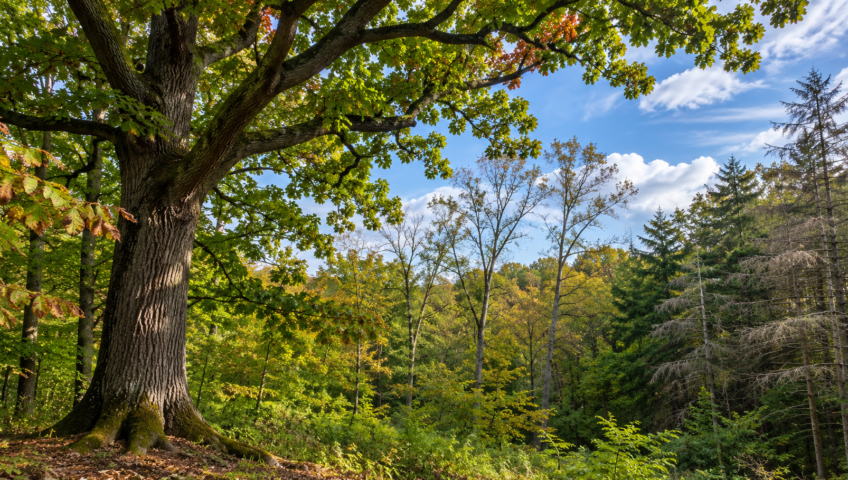
An alarming New York Times investigation reveals how invasive insects and diseases are quietly destroying America’s forests. With deadly oak wilt already discovered across the Niagara River in Canada, and in nearby Monroe County here in Western New York, residents and landowners have compelling reasons to be concerned.
A Silent Environmental Disaster Is Unfolding Across America
Imagine looking out your window one summer morning and discovering that the magnificent oak tree that has shaded your home for generations is suddenly losing its leaves. Within weeks, its once-lush canopy turns brown. By autumn, the tree may be dead.
This isn’t a hypothetical scenario. It’s an environmental crisis already unfolding, often beyond public notice. On October 19, 2026, The New York Times published a disturbing investigation titled “The Overlapping Plagues Quietly Devastating American Forests.” Reported by Catrin Einhorn and Douglas Main, the article describes a growing biological assault on America’s forests. Invasive insects, fungi and other pathogens are attacking multiple tree species, killing billions of trees and threatening to permanently transform entire ecosystems. Unlike hurricanes, wildfires or floods, these destructive epidemics rarely make national headlines. Instead, they advance silently, one tree at a time.
For Western New York residents, especially those living around Buffalo, Niagara Falls, Lewiston, Youngstown and Lockport, the warning deserves particular attention. One of the most destructive tree diseases in North America, oak wilt, has already been confirmed directly across the Niagara River in Ontario, Canada. The question is no longer whether tree diseases can devastate our communities. We have already witnessed the destruction of countless ash trees by the emerald ash borer. The question is whether we will act early enough to prevent another ecological disaster.
Four Major Tree Threats Facing Western New York
Western New York already faces several serious forest-health challenges. Understanding them demonstrates why the national warning should resonate locally.
1. Emerald Ash Borer: A Devastating Lesson
The emerald ash borer is an invasive beetle originally from Asia that attacks native ash trees. Its larvae feed beneath the bark, disrupting the tree’s ability to transport nutrients and water. Since arriving in North America, the insect has killed millions of ash trees and caused extensive ecological and economic damage. Across Western New York, dead and declining ash trees have become familiar sights along roadsides, in parks and on private property. Communities have spent substantial sums removing dangerous trees, while homeowners have lost shade, privacy and valuable landscaping. The emerald ash borer demonstrates how quickly an invasive pest can transform a familiar landscape. It also illustrates the importance of intervening before a pest becomes widespread.
2. Hemlock Woolly Adelgid: Threatening Forest Ecosystems
Eastern hemlocks are among the most ecologically important trees in northeastern forests. Their dense evergreen canopies provide year-round shelter for wildlife, cool streams, reduce soil erosion and help maintain delicate woodland environments. Unfortunately, the invasive hemlock woolly adelgid threatens these trees. This tiny insect feeds near the base of hemlock needles, weakening the tree and eventually causing extensive dieback and death. Scientists at Cornell University, including researchers associated with the New York State Hemlock Initiative, are working to protect hemlock forests. Their research reflects the urgency of protecting a tree species whose disappearance could alter entire ecosystems.
3. Beech Leaf Disease: Another Growing Concern
American beech trees are also facing a serious emerging threat. Beech leaf disease is associated with a microscopic nematode that damages foliage and interferes with normal tree growth. Symptoms include dark bands between leaf veins, curling leaves, reduced foliage and progressive canopy deterioration. Young beech trees can decline particularly rapidly, although mature specimens are also vulnerable. The disease has spread through much of New York, including Western New York, and scientists continue investigating its biology and potential treatments. Beech trees provide nuts for birds and mammals and contribute substantially to forest biodiversity. Their loss represents far more than the disappearance of another attractive tree species.
4. Oak Wilt: A Dangerous Threat Close to Home
For residents of the Niagara Frontier, oak wilt may be the most immediate emerging concern for our valuable oak populations. Oak wilt is a destructive vascular disease caused by the fungus Bretziella fagacearum. It attacks the water-conducting system inside the tree, restricting moisture and nutrient movement from the roots into the canopy. The consequences can be swift and devastating. Red oaks can die within a matter of weeks to months after symptoms appear. White oaks generally show greater resistance and may survive for years, although they can also be severely damaged or killed. Unlike many ordinary tree diseases, oak wilt can spread between neighboring trees, making early detection and containment critically important.
Oak Wilt Has Already Reached the Niagara Region
In June 2023, Canadian authorities confirmed the country’s first occurrence of oak wilt in Niagara Falls, Ontario. Additional detections followed in Niagara-on-the-Lake and Springwater, near Barrie. The Niagara-on-the-Lake detection is especially troubling because the community is located just across the Niagara River from Youngstown and Lewiston, New York. These findings demonstrate that oak wilt is no longer a distant problem confined to the Midwest. It has reached our immediate geographic region.
New York State has experienced oak wilt outbreaks elsewhere, including in the Finger Lakes Region and more recently in Monroe County here in Western New York. State officials continue monitoring and managing the disease. The Canadian detections underscore the importance of local vigilance. Insects do not recognize international boundaries, and infected wood can be transported by human activity. Waiting until trees begin dying across our region would be a costly approach to protecting our oak population.
Global Trade Has Opened the Door to Invasive Forest Pests
One of the central findings highlighted by The New York Times is the important role international commerce has played in spreading destructive organisms around the world. Every day, enormous quantities of manufactured products, agricultural commodities and nursery plants cross international borders. Unfortunately, some shipments carry unwanted passengers.
Insects can hide inside wooden shipping pallets, crates and packing materials. Microscopic pathogens may travel inside living plants. Other organisms move with contaminated wood and agricultural products. Once established in an unfamiliar environment, an introduced pest may encounter trees with little natural resistance and few effective predators. The consequences can be catastrophic.
Our native trees evolved alongside their traditional enemies over thousands of years. But when a destructive foreign organism arrives, the evolutionary balance can be disrupted. Not every disease has the same origin or pathway of introduction. Nevertheless, increased global movement of plants, wood and biological organisms has created more opportunities for destructive forest pests to establish themselves. The result is an accelerating series of biological invasions that threaten America’s natural heritage.
The Problem Isn’t One Disease — It’s Many Epidemics at Once
Perhaps the most disturbing message of the Times investigation is that America’s forests are not fighting a single enemy. They are confronting multiple overlapping threats. One insect destroys ash trees. Another attacks hemlocks. A disease weakens beech trees. Meanwhile, oak wilt threatens some of our most valuable hardwoods. Individually, each epidemic can cause enormous damage. Collectively, they can change the entire composition of a forest.
Consider a woodland containing ash, oak, beech, maple and hemlock trees. Over time, invasive pests may eliminate much of the ash population, weaken the beech trees, and kill hemlocks that shade streams and stabilize hillsides. If oak wilt subsequently attacks the remaining mature oaks, the forest may lose several of its most important structural and ecological components. New trees and vegetation may eventually replace some of the losses, but the resulting ecosystem can be radically different. A mature forest cannot simply be reconstructed by planting seedlings. It takes decades, sometimes centuries, to recreate the ecological benefits provided by established trees.
How Does Oak Wilt Spread?
Understanding how oak wilt travels is essential to preventing new infections. The disease spreads through two principal pathways.
Sap-Feeding Beetles
Certain sap-feeding beetles can carry fungal spores from infected oak trees to healthy ones. These beetles are attracted to fungal growth on diseased trees and to freshly exposed sap from wounds. Pruning, storm damage, construction injuries and broken branches can create entry points for infection. When contaminated beetles visit a fresh wound, the fungus may enter the tree. This is one reason proper pruning practices are so important.
Underground Root Connections
Oak wilt can also spread between neighboring oaks through interconnected root systems known as root grafts. When roots from adjacent trees naturally fuse, they can create pathways through which the fungus moves from one tree to another. This transmission is especially concerning among closely spaced red oaks. Consequently, removing a visibly diseased tree may not be sufficient to stop an established infection center. Professional containment measures may require disrupting root connections and following procedures established by forestry authorities.
Seven Warning Signs of Oak Wilt
Homeowners should become familiar with the symptoms of oak wilt, particularly during the growing season. Common warning signs include:
- Sudden leaf wilting: Leaves lose their normal appearance during late spring or summer.
- Premature leaf drop: Large numbers of leaves fall long before autumn.
- Brown leaf margins: Discoloration begins near the outer edges and progresses inward.
- Rapid canopy thinning: A formerly dense crown becomes visibly sparse.
- Branch dieback: Upper branches begin dying, sometimes progressing downward.
- Leaves falling while partly green: Some infected red oaks shed leaves that retain green coloration.
- Rapid deterioration: A previously healthy-looking oak declines dramatically within weeks.
These symptoms do not automatically establish an oak wilt diagnosis. Drought, root damage and other diseases can produce similar signs. Suspected oak wilt should be reported to the New York State Department of Environmental Conservation for evaluation and possible laboratory testing.
How Homeowners Can Help Prevent Oak Wilt
Although oak wilt is a serious threat, homeowners can take practical steps to reduce the risk of infection and help protect their communities.
Avoid Pruning Oaks During High-Risk Months
New York DEC recommends avoiding oak pruning or other injuries from March through September. The risk of beetle-transmitted infection is particularly high during spring and early summer. Whenever possible, schedule routine oak pruning during winter dormancy.
Protect Fresh Wounds
If an oak is accidentally damaged during the growing season, promptly covering exposed wounds with an appropriate dressing or latex-based paint may reduce the chance of attracting beetles.
Don’t Transport Potentially Infected Firewood
Moving firewood can transport destructive insects and pathogens into previously unaffected areas. Purchase firewood locally and follow all applicable state regulations and quarantine restrictions. Never transport wood from a known oak wilt infection site contrary to official instructions.
Monitor Valuable Trees
Regularly inspect mature oaks for unusual leaf discoloration, branch dieback or premature defoliation. Early recognition can help authorities identify and contain new disease outbreaks.
Keep Trees Healthy
Proper mulching, watering during drought and protecting root systems from construction damage can improve overall tree health. While good maintenance cannot make an oak immune to oak wilt, avoiding unnecessary stress is important for long-term vitality.
Can Preventive Fungicide Injections Protect Oak Trees?
Yes, oak trees can be injected with preventative vaccinations. These injections contain special fungicides that can protect trees for 2–3 years depending on the threat level. That’s our focus here at Saving Oaks — we don’t cut trees down. We try saving them with vaccinations that prevent fungal infections.
At Saving Oaks, we believe the objective should always be the same: selecting responsible measures that offer the best opportunity to preserve high-value mature trees while helping prevent disease spread. While fungicide injections offer no guarantees (all trees die eventually), current science indicates they offer a preventive option to help protect the health and vibrancy of valuable oak trees.
Why Oak Trees Are Especially Worth Protecting
Few trees are more important to Western New York’s natural landscape than our native oaks. A mature oak can live for centuries, growing into an enormous living structure that supports an extraordinary variety of wildlife. Its acorns provide food for deer, squirrels, turkeys and numerous other animals. Its branches offer nesting sites, while its leaves support caterpillars and other insects essential to birds. Oak trees also deliver important benefits to homeowners and communities. They provide summer shade that can reduce cooling demands, intercept stormwater, store carbon, improve air quality and enhance neighborhood appearance. A healthy, mature oak may also contribute significantly to a property’s value. But there is something else that cannot easily be measured in dollars.
A 200-year-old oak is a living connection to history. It may have stood before the surrounding homes, streets or entire neighborhoods existed. It may have witnessed generations of families, community celebrations and historical events. When such a tree dies, replacing it with a six-foot sapling does not restore what was lost. The original tree’s size, character, environmental contributions and historical significance may take generations to recreate. Preserving a mature oak can be far more valuable than replacing it after disease or neglect has destroyed it.
The Economic Cost of Losing Mature Oaks
An oak tree represents both an environmental asset and a significant financial investment. Removing a large dead oak can require specialized equipment, experienced crews and substantial expense. Additional costs may include stump removal, landscape restoration, replacement planting and damage to surrounding vegetation. When a community loses dozens or hundreds of mature trees, those expenses multiply.
There are also costs that never appear on an invoice. Neighborhoods lose shade. Wildlife loses habitat. Stormwater runoff can increase. Homes become more exposed to summer heat. And property owners may lose trees that gave their surroundings character and beauty for generations. Preventing avoidable tree losses is therefore not simply an environmental concern. It is a matter of sound property stewardship and long-term community planning.
Protecting Our Forests Requires Community Action
The Times investigation highlights a challenge that no individual homeowner, municipality or tree-care company can solve alone. Effective forest protection requires cooperation among researchers, regulatory agencies, professional arborists, local governments and property owners. Communities can help by educating residents, monitoring public trees, requiring responsible pruning practices and supporting early detection programs. Homeowners can contribute by reporting suspicious symptoms, following firewood regulations and obtaining professional guidance before undertaking risky tree work.
Local organizations can help spread awareness of emerging threats. The more people who understand the danger, the better our chances of recognizing problems before they become regional catastrophes. For Western New York, this collaborative approach is especially important because of our proximity to confirmed oak wilt detections in Ontario and Monroe County.
Frequently Asked Questions About Oak Wilt in Western New York
Has oak wilt been found in Niagara County, New York?
No. However, New York DEC has placed monitoring stations in Youngstown and Niagara Falls, New York, in an attempt to detect the threat level of oak wilt. Residents should remain watchful and vigilant for symptoms and report them immediately to NY DEC if an infection is suspected. If you do come across symptoms, photograph the entire tree, affected leaves and trunk. Record its location and when symptoms began. Contact the New York State DEC Forest Health Program at 866-640-0652 or foresthealth@dec.ny.gov. Also, you can text a copy of the photo to us here at Saving Oaks at 716-273-5522.
How quickly can oak wilt kill a tree?
Red oaks can die within weeks to months after symptoms emerge. White oaks often decline more slowly and may experience a slow lingering death over several years.
Can an infected oak tree be saved?
Treatment success depends on the oak species, severity of infection and surrounding conditions. Symptomatic red oaks generally have a poor prognosis. Early-stage infections in some white oaks may respond to treatment in certain circumstances. Confirmed cases require professional management consistent with state containment guidance.
When is the safest time to prune oak trees?
Winter is generally the safest season for routine oak pruning in Western New York. Avoid unnecessary wounds during the growing season, particularly March through September.
Saving Our Oaks Before It’s Too Late
America’s forests are sending a warning. The devastating epidemics described by The New York Times demonstrate that even our largest, strongest and oldest trees are not invulnerable. Western New York has already experienced the destruction caused by invasive forest pests. We should learn from those losses rather than repeat them. Oak wilt’s confirmed presence across the Niagara River gives our region another reason to take forest protection seriously.
Our mature oaks are irreplaceable natural assets. They provide beauty, shade, habitat, environmental protection and a living connection to the past. They deserve our attention before visible damage becomes irreversible. At Saving Oaks, our mission is to help preserve these remarkable trees for future generations. Through education, tree-health assessment and consideration of appropriate protective measures, we encourage homeowners to take a proactive role in caring for their oaks.
If you own a mature oak in Buffalo, Lewiston, Youngstown, Niagara Falls or elsewhere in Western New York, now is an excellent time to learn about its health and potential risks. Don’t wait until a treasured tree begins to die to ask how it might be protected. Contact Saving Oaks, LLC to learn more about oak tree health, oak wilt prevention and responsible preservation options in Western New York. Call or text 716-273-5522 or contact us online.
